Gum Disease Treatment in Englewood, NJ
Treat bleeding, swollen, or receding gums with gum disease treatment in Englewood, NJ focused on stabilizing your gums and protecting your teeth.
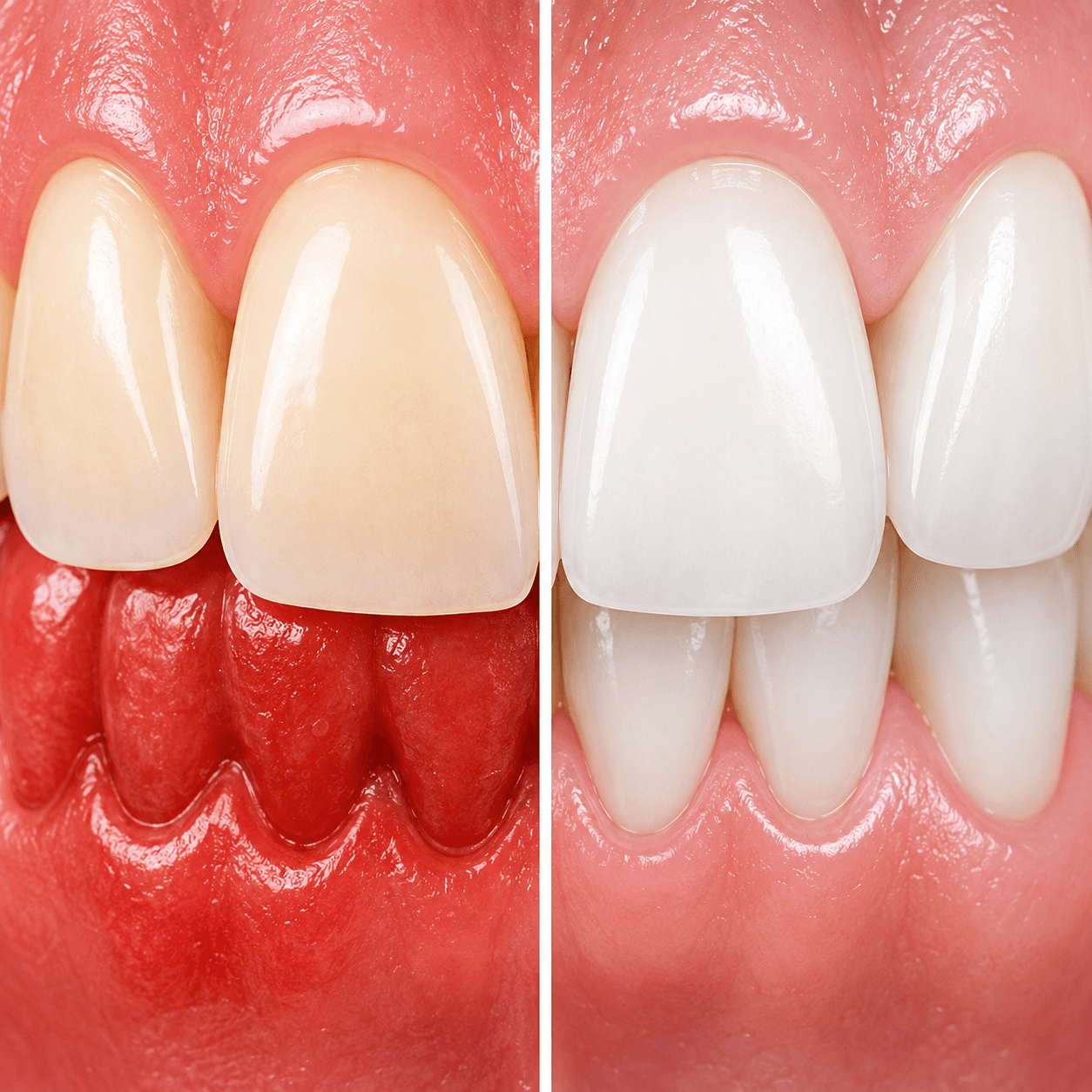
What is gum disease treatment?
If your gums bleed when you brush, that's not "normal for you" — it's the earliest, most fixable stage of gum disease. Gingivitis is inflammation of the gum tissue caused by plaque and tartar buildup, and at that stage a thorough cleaning and better home care can fully reverse it.
Left alone, the inflammation moves deeper. Periodontitis forms pockets between gum and tooth, the bacteria colonize where your brush can't reach, and the bone holding your teeth starts to dissolve. That bone doesn't grow back — which is why gum disease, not decay, is the leading reason adults lose teeth. Treatment at this stage means a deep cleaning (scaling and root planing) below the gumline, then a maintenance schedule to keep the bacteria controlled.
We take this seriously at Englewood Dentistry: every exam includes pocket measurements, and digital X-rays show us bone levels precisely, so you hear exactly where you stand — stage, numbers, and plan — in plain language.
Signs we evaluate and treat
- Bleeding when brushing or flossing
- Red, swollen, or tender gums
- Persistent bad breath
- Gum recession or longer-looking teeth
- Loose or shifting teeth
- Deep pockets around teeth
What to expect, step by step
We measure your gum health, remove the buildup driving inflammation, and set a maintenance schedule to help keep disease under control.
Periodontal exam
We measure gum pockets, review X-rays, and identify areas of inflammation or bone loss.
Deep cleaning
Scaling and root planing remove tartar and bacteria below the gumline, with numbing as needed.
Healing check
We re-evaluate the gums to confirm how the tissue is responding.
Maintenance
A personalized hygiene schedule helps keep inflammation controlled over time.
Gum health and your overall health
Chronic gum infection is chronic inflammation, and research keeps connecting it to problems well beyond the mouth: cardiovascular disease, harder-to-control diabetes, and pregnancy complications. This runs both directions — diabetes makes gum disease worse, and treating gum disease often makes blood sugar easier to manage. If you're dealing with either, your dentist and physician should both know about the other.
Prevention is genuinely simpler than treatment here. Brushing twice daily, flossing, and regular cleanings and exams stop most gum disease before it starts. Many of our Teaneck and Englewood patients first learn they have early gum disease at a routine cleaning — which is the best possible place to catch it.
Cost, insurance, and financing
Periodontal treatment is priced by how much of the mouth needs deep cleaning — often measured in quadrants — and most dental insurance covers a meaningful portion because it's medically necessary care. We verify your benefits and explain your estimated out-of-pocket cost before treatment begins. Cherry, CareCredit, and Sunbit financing options are subject to approval and terms; see our financial information page.
No dental insurance? We offer an in-house membership plan. Call (201) 541-8111 for details.
Related treatment options
Healthy gums start with routine cleanings and exams. Advanced cases sometimes involve oral surgery, and stabilizing gum health is a prerequisite before dental implants can be placed — implants need healthy bone and tissue to succeed.
Why patients choose us here
- Pocket measurements at every exam — not just when something hurts
- Deep cleanings done with numbing, at a pace you're comfortable with
- Re-evaluation visits to confirm the gums are actually healing
- Straight talk about stage, bone levels, and what maintenance requires